
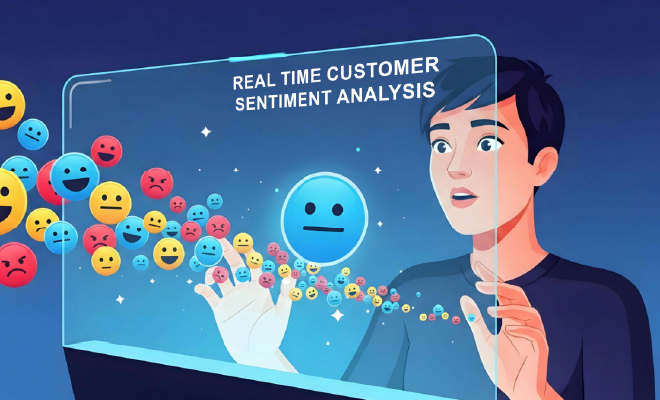
Is your contact center investing in real-time sentiment analysis when post-call analytics would deliver better ROI?
The appeal of detecting customer emotional state during live conversations drives significant technology investment across contact centers. Vendors promote real-time sentiment analysis as a capability that transforms service quality through immediate intervention. Yet most organizations deploying these systems struggle to demonstrate measurable value that justifies the technical complexity and operational overhead involved.
Real-time sentiment analysis contact center implementations require infrastructure capable of processing audio streams with sub-second latency, sophisticated models that maintain accuracy under time pressure, and operational frameworks that convert sentiment signals into appropriate responses without overwhelming agents or supervisors. These requirements create implementation challenges that extend far beyond standard call center sentiment analysis
Organizations implementing real-time sentiment analysis report 15-30% false positive rates and 3-4x infrastructure costs compared to post-call analytics, with measurable ROI limited to collections, high-value sales, and crisis management scenarios.”
This analysis examines when real-time capabilities justify their complexity, the technical architecture required for effective implementation, and the operational challenges that determine whether deployments succeed or fail.
KEY TAKEAWAYS
- Real-time sentiment analysis requires 3-4x infrastructure costs and accepts 15-30% false positive rates compared to post-call analytics, with measurable ROI limited to specific high-value scenarios.
- Post-call analysis achieves 85-92% accuracy versus 75-82% for real-time systems, providing strategic depth through complete conversation analysis without processing constraints.
- Collections, high-value sales ($50,000+ deals), crisis management, and customer retention (>$25,000 annual value) represent scenarios where real-time capabilities justify implementation complexity.
- Technical architecture demands sub-500ms end-to-end latency across audio capture, model inference, and alert delivery, requiring careful capacity planning for 150% of peak concurrent calls.
- False positive rates of 15-20% in mature implementations remain unavoidable, requiring multi-factor alert triggers and confidence-based prioritization to maintain supervisor adoption.
- Alert strategies must balance coverage against supervisor capacity of 8-12 investigations per shift, using sustained negative sentiment (30-60 seconds) and contextual factors for reliable triggers.
- Implementation timelines span 16-24 weeks for organizations with appropriate infrastructure, with vendor estimates excluding critical integration work and performance optimization phases.
Real-Time vs. Post-Call Sentiment Analysis
| Characteristic | Post-Call Analysis | Real-Time Analysis |
| Processing Timing | Minutes to hours after call completion | During active conversation (sub-second latency) |
| Accuracy Rate | 85-92% sentiment classification | 75-82% sentiment classification |
| Infrastructure Cost | Baseline ($15,000-$35,000 annually for 100 seats) | 3-4x higher than post-call |
| Analytical Depth | Complete conversation analysis with sophisticated models | Limited by time pressure (1-2 second segments) |
| Context Available | Full interaction history and customer background | Minimal context early in conversation |
| Primary Use Case | Quality monitoring, coaching, process improvement | Immediate intervention and escalation |
| False Positive Rate | Lower due to comprehensive analysis | 15-30% in production environments |
| Response Capability | Strategic insights for operational cycles | Supervisor alerts and agent guidance |
Real-Time vs. Post-Call: The Tradeoff Most Vendors Won’t Tell You
The distinction between real-time sentiment analysis and post-call analytics involves fundamental differences in architecture, accuracy, and operational value that vendors typically minimize during sales processes.
Post-Call Sentiment Analysis: The Strategic Foundation
Post-call voice sentiment analysis processes recordings after interactions complete, typically within minutes to hours of call conclusion. This approach enables thorough analysis using sophisticated models that can consider complete interaction context. Organizations gain several advantages through post-call processing:
Analytical depth: Models can analyze entire conversations, identifying sentiment patterns across different interaction phases and correlating emotional tone with specific topics, agent behaviors, or resolution outcomes.
Accuracy advantage: Without real-time processing constraints, post-call systems achieve 85-92% accuracy in sentiment classification compared to 75-82% for real-time implementations using the same underlying data.
Infrastructure efficiency: Batch processing spreads computational load across hours, reducing infrastructure requirements by 60-75% compared to real-time systems handling equivalent interaction volumes.
Strategic applications: Post-call insights inform quality monitoring software workflows, coaching programs, and process improvement initiatives that operate on daily or weekly cycles. Organizations identify systemic issues—process weaknesses, training gaps, service design problems—that deliver more lasting value than rapid detection of individual negative interactions.
Real-Time Sentiment Analysis: The Intervention Model
Real-time systems monitor emotional state during active conversations, detecting sentiment shifts as they occur. This capability enables immediate intervention—supervisor alerts, agent guidance prompts, or automated workflow triggers—while interactions continue.
Processing constraints: Systems must analyze audio streams with minimal latency, typically processing 1-2 second segments to maintain responsiveness. This time pressure restricts analytical sophistication, requiring simpler algorithms that trade accuracy for speed.
Context limitations: Early in conversations, call center sentiment analysis systems have minimal context about interaction history, customer background, or issue complexity. A customer discussing a billing error might sound frustrated while remaining satisfied with service quality overall. Real-time systems detect immediate frustration without the complete interaction context that post-call analysis provides.
Infrastructure requirements: Real-time processing demands dedicated resources to handle peak concurrent call volumes with consistent low latency. Organizations typically need 3-4x the infrastructure investment compared to post-call systems processing the same interaction volume.
Operational integration demands: Real-time capabilities require immediate response mechanisms—supervisor alert systems, agent desktop integration for guidance prompts, and escalation workflows that function during active calls. Building these operational integrations requires substantial effort beyond core analytical technology.
The Financial Reality
Cost analysis reveals significant differences between approaches. Post-call sentiment analysis contact center implementations typically cost $15,000-$35,000 for 100-seat contact centers annually, including software licensing and standard infrastructure. Real-time capabilities increase this to $50,000-$120,000 annually when accounting for infrastructure upgrades, integration complexity, and ongoing optimization requirements.
Most contact centers operating typical customer service or support functions find that post-call sentiment analysis addresses their needs effectively. The strategic insights from thorough post-call analysis deliver more value than rapid detection of individual negative interactions. Organizations should default to post-call approaches unless they can identify specific use cases where immediate intervention during calls provides measurable advantage.
When Real-Time Sentiment Analysis Actually Makes Sense
Certain operational contexts create sufficient value from immediate sentiment detection to justify real-time implementation complexity. These scenarios share common characteristics: high individual interaction value, time-sensitive intervention opportunities, and clear response protocols that supervisors can execute during calls.
1. Collections Operations: Revenue Recovery Through Intervention
Collections represents the most common justified use case for real-time sentiment analysis. Individual collection calls directly impact revenue recovery, and customer emotional state significantly affects payment commitment likelihood.
The business case: Research indicates that customers who become highly agitated during collection calls are 60-70% less likely to honor payment arrangements even if they verbally agree. Real-time detection of escalating negative sentiment enables supervisors to intervene before emotional state deteriorates beyond recovery.
The intervention mechanism: When sentiment analysis tools detect sustained negative sentiment exceeding defined thresholds, supervisors receive alerts with call details. They can listen to the interaction and either provide real-time coaching through whisper capabilities or take over the call directly. This immediate response can salvage payment commitments that would otherwise fail.
Measurable outcomes: Organizations implementing real-time sentiment in collections operations report 12-18% improvement in payment commitment follow-through rates and 25-35% reduction in post-call complaints to regulatory bodies.
2. High-Value Sales Conversations: Protecting Revenue Opportunities
Enterprise sales conversations involving significant revenue per transaction justify real-time monitoring investments that would not be appropriate for routine transactions.
Deal value thresholds: Organizations typically implement real-time sentiment for sales interactions involving individual deals exceeding $50,000-$100,000 in value. At these thresholds, the potential revenue impact of successfully closing deals that might otherwise fail justifies the technical investment.
Detection focus: Call center sentiment analysis systems monitor for buyer hesitation signals—extended pauses, questions about competition, pricing objections delivered with negative emotional tone—that indicate deals at risk.
Response protocols: Sales managers receive alerts enabling them to provide guidance to representatives struggling with objections or redirect conversations that drift off course. In critical situations, managers may join calls directly to address executive-level concerns.
ROI validation: High-performing sales organizations report that real-time sentiment enables recovery of 8-15% of at-risk deals that would otherwise fail, with average deal values of $150,000-$500,000 in enterprise software and professional services verticals.
3. Crisis Management: Time-Compressed Response Scenarios
During service outages, product recalls, or reputational incidents, customer sentiment detection helps organizations prioritize response resources and identify situations requiring executive intervention.
Rapid escalation requirements: Crisis situations demand identification of high-influence customers or situations with potential for significant reputational damage within minutes rather than hours or days.
Intervention criteria: Real-time sentiment analysis contact center systems flag interactions involving:
- Customers with verified social media influence (50,000+ followers)
- Sustained extreme negative sentiment (below -0.8 on normalized scales)
- Explicit threats of legal action or regulatory complaints
- Media representatives identifying themselves during interactions
Executive engagement protocols: Organizations establish clear criteria for when crisis sentiment alerts warrant C-level executive engagement versus standard escalation procedures.
3.4 High-Value Customer Retention
When customers with substantial lifetime value contact organizations to discuss service issues or potential cancellation, sentiment detection enables proactive escalation before customers make final decisions.
Customer value thresholds: Organizations typically implement real-time sentiment monitoring for customers with annual contract values exceeding $25,000 or demonstrated lifetime values above $100,000.
Retention economics: The cost of real-time infrastructure becomes negligible when compared to customer lifetime value. Preventing churn of even 1-2% of high-value customers annually justifies implementation costs.
Routing intelligence: Voice sentiment analysis enables dynamic routing that escalates negative sentiment interactions involving high-value customers to specialized retention teams or relationship managers while the customer remains on the call.
The Common Thread: Clear Financial Justification
These scenarios share essential characteristics that justify real-time investment:
- Quantifiable per-interaction value: Each call has identifiable financial impact (deal size, payment amount, customer lifetime value)
- Intervention effectiveness: Organizations can demonstrate that mid-call intervention measurably improves outcomes compared to standard handling
- Response capacity: Supervisors or specialized teams can respond to alerts within 30-60 seconds while intervention remains effective
- Clear ROI calculation: Organizations can calculate cost per intervention and compare against prevented losses or captured revenue
Organizations lacking these characteristics should reconsider whether real-time capabilities justify their complexity and cost.
Architecture Requirements for Sub-Second Latency
Effective real-time sentiment analysis demands technical architecture specifically designed for low-latency processing. Standard speech analytics call center infrastructure does not typically meet these requirements without substantial modification or replacement.
1. Audio Streaming Infrastructure
Real-time systems need direct access to live audio streams rather than recorded files. This requires integration with telephony platforms that support streaming protocols with minimal buffering.
Latency requirements: Organizations must verify that their phone system architecture can provide audio streams to analytical systems with latency under 200 milliseconds. Legacy telephony infrastructure may require upgrades to support the necessary streaming capabilities.
Protocol compatibility: Modern deployments typically use WebRTC, SIP trunking with RTP streams, or proprietary telephony vendor APIs that support real-time audio access. Organizations should validate protocol compatibility during vendor selection.
Concurrent stream capacity: Processing infrastructure must handle concurrent analysis for all active calls. During peak periods, large contact centers might have 500-1,000 simultaneous conversations requiring real-time analysis.
2. Processing Infrastructure and Capacity Planning
The processing cluster must maintain sub-second latency across entire concurrent load, not just for single conversations.
Capacity planning methodology:
- Calculate peak concurrent calls: Measure 95th percentile concurrent call volume over 30 days
- Apply overhead factor: Plan infrastructure for 150% of peak concurrent calls to maintain performance during traffic spikes
- Validate under load: Test sentiment processing latency with simulated peak+20% volume before production deployment
Example calculation: A 500-seat contact center averaging 70% occupancy at peak reaches 350 concurrent calls. Infrastructure should support 525 concurrent sentiment analyses (350 × 1.5) to maintain consistent performance.
Infrastructure options:
- On-premises deployment: Dedicated GPU-accelerated servers for sentiment model inference
- Hybrid architecture: On-premises audio capture with cloud processing for sentiment analysis
- Cloud-native: Full cloud deployment using auto-scaling capabilities (requires network latency validation)
3. Sentiment Model Architecture for Real-Time Processing
Real-time models use different architectures than batch processing models, trading accuracy for speed.
Model characteristics:
- Processing window: 1-2 second audio segments
- Inference latency target: 200-500 milliseconds per segment
- Architecture type: Lightweight neural networks (LSTM, GRU) or ensemble methods optimized for edge deployment
Accuracy expectations: Real-time sentiment models typically achieve 75-82% accuracy compared to 85-92% for post-call models using the same training data. This 5-10 percentage point accuracy reduction represents the cost of real-time processing.
Continuous learning requirements: Models should retrain monthly using validated interaction samples to maintain accuracy as language patterns and customer demographics evolve.
4. Network Architecture and Latency Management
Network latency between telephony infrastructure and sentiment processing systems can undermine real-time capabilities even if processing happens quickly.
Latency budget allocation:
- Audio capture to processing entry: <100ms
- Sentiment model inference: <300ms
- Alert generation and delivery: <100ms
- Total end-to-end target: <500ms
Cloud deployment considerations: Organizations using cloud-based sentiment analysis contact center solutions need careful network planning. Direct connect or dedicated circuits between on-premises telephony and cloud processing regions reduce latency compared to standard internet connections.
Geographic distribution: For multinational operations, distributed processing infrastructure in multiple regions reduces latency by processing audio streams closer to their source.
5. Alert Delivery and Integration Systems
Alert delivery systems must notify supervisors or trigger agent desktop prompts with minimal delay.
Delivery mechanisms:
- Supervisor dashboard alerts: Visual notifications with call details and sentiment trends
- Desktop integration: Agent screen prompts with guidance suggestions
- Communication platform alerts: Slack/Teams notifications for crisis situations
- Telephony integration: Automatic call routing adjustments based on sentiment detection
Response time requirements: Once sentiment scores identify situations requiring intervention, the alert mechanism should reach relevant personnel within 2-3 seconds. Organizations should test alert delivery under realistic conditions to verify supervisors receive actionable information while intervention remains possible.
6. Data Persistence Without Performance Impact
Organizations require audit trails showing when alerts triggered, what sentiment patterns caused them, and how supervisors responded.
Asynchronous persistence: The data persistence layer must write records asynchronously to avoid adding latency to the critical processing path. Real-time processing continues uninterrupted while audit data writes to persistent storage in parallel.
Retention requirements: Organizations typically retain real-time sentiment data for 90-365 days depending on regulatory requirements and operational needs. Sentiment scores, alert triggers, and intervention records should persist separately from audio recordings to enable analysis without retaining full recordings indefinitely.
7. Implementation Timeline Reality Check
Technical implementation requires 16-24 weeks for organizations with appropriate infrastructure foundation:
- Weeks 1-4: Architecture design and infrastructure procurement
- Weeks 5-8: System integration and model deployment
- Weeks 9-12: Performance optimization and latency tuning
- Weeks 13-16: Pilot deployment with limited agent population
- Weeks 17-24: Controlled expansion and operational refinement
Organizations lacking suitable infrastructure should add 8-12 weeks for telephony upgrades or cloud migration activities. Vendor estimates promising deployment in 4-6 weeks typically exclude critical integration work or assume existing infrastructure that most organizations lack.
The False Positive Problem That Kills Adoption
Technical capability does not guarantee operational adoption. Real-time sentiment analysis implementations frequently fail not because systems malfunction but because false positive rates undermine user confidence and create alert fatigue.
1. Understanding False Positive Impact
False positives occur when voice sentiment analysis incorrectly identifies negative sentiment in neutral or positive interactions. In real-time environments with limited context, false positive rates typically range from 15-30% depending on model sophistication and alert threshold settings.
Translation to operations: For a contact center generating 100 daily alerts, 15-30 alerts involve situations that do not actually require intervention. This false alarm rate quickly erodes supervisor engagement with the system.
The adoption psychology: Supervisors follow a predictable response pattern:
- Week 1-2: Respond to all alerts, investigating every flagged interaction
- Week 3-4: Discover 20-30% of alerts identify non-problems, begin questioning system reliability
- Week 5-8: Develop skepticism, start prioritizing other tasks over alert investigation
- Week 9+: Largely ignore alerts unless other indicators suggest problems
Once supervisor confidence erodes, recovery requires extensive recalibration and change management effort.
2. Root Causes of False Positives
Context limitation failures: Customers discussing problems inevitably express frustration or disappointment, even when satisfied with service response. Call center sentiment analysis models detect immediate emotional tone without understanding whether that tone is appropriate given the situation.
Example scenario: An insurance claim adjuster handling a difficult claim encounters customer distress about the underlying incident (vehicle accident, property damage) rather than dissatisfaction with service. Real-time systems struggle to distinguish these scenarios without complete interaction context.
Cultural and linguistic variations: Sentiment models trained primarily on one demographic group may misinterpret communication patterns from other groups. Direct communication styles that some cultures favor might register as aggressive or negative in models calibrated for more indirect styles.
Accuracy impact: Organizations serving diverse customer populations often see 5-10 percentage point accuracy variation across demographic segments. A model achieving 80% overall accuracy might perform at 75% for specific cultural groups.
Natural emotional expression in service contexts: Service interactions involve legitimate expressions of concern, urgency, or disappointment that do not indicate poor service quality. A customer describing a serious problem with appropriate emotional weight creates sentiment signals that real-time systems may interpret as negative despite effective agent handling.
3. False Positive Mitigation Strategies
Organizations can reduce false positive rates through systematic approaches, though eliminating them entirely remains unrealistic with current technology.
Alert threshold optimization: Setting sensitive thresholds catches more genuine problems but increases false alarms. Conservative thresholds reduce false positives but miss situations requiring intervention.
Optimization methodology:
- Establish baseline: Deploy with moderate thresholds, track false positive and false negative rates for 30 days
- A/B testing: Randomly assign 50% of agents to adjusted thresholds, compare intervention rates and outcomes
- Iterative refinement: Adjust thresholds monthly based on supervisor feedback and outcome data
- Target balance: Aim for 12-18% false positive rate as acceptable tradeoff for catching 80%+ of genuine issues
Multi-factor alert triggers: Requiring both sentiment signals and contextual factors before triggering alerts significantly reduces false positives.
Example trigger logic:
ALERT if:
(Sustained negative sentiment > 45 seconds) AND
(Customer segment = High Value OR Premium) AND
(Agent experience level < 6 months OR Agent quality score < 80%)
This approach reduces alert volume by 40-60% while maintaining coverage of high-priority situations.
Supervisor feedback loops: Enabling supervisors to mark false positives creates training data for continuous model refinement.
Implementation approach:
- One-click feedback: Simple “Not a problem” button in alert interface
- Mandatory classification: Require supervisors to classify alert outcomes (Intervention needed/False positive/Resolved without intervention)
- Monthly model retraining: Incorporate validated false positive examples into model training
- Expected improvement: 3-5 percentage point false positive reduction every 90 days
Alert prioritization with confidence scores: Rather than binary alerts, systems can present supervisors with prioritized lists showing confidence levels.
Display approach:
- Critical (>90% confidence): Red alerts requiring immediate response
- High (75-90% confidence): Orange alerts for investigation when time permits
- Moderate (60-75% confidence): Yellow notifications for awareness only
This tiered approach enables supervisors to focus attention on highest-confidence situations when they cannot investigate all triggers.
4. Establishing Realistic Performance Expectations
Organizations should communicate honest accuracy expectations during implementation:
Initial deployment (Months 1-3): Expect 25-35% false positive rates as systems learn organizational patterns and supervisors calibrate thresholds.
Optimization phase (Months 4-6): Target 18-25% false positive rates through threshold adjustment and feedback loop integration.
Mature operation (Months 7+): Achieve 15-20% false positive rates with continuous refinement. Systems rarely perform better than 15% false positive rates in production environments.
Organizations that never reach below 20% false positive rates struggle with long-term adoption regardless of technical sophistication. This performance threshold represents a practical limit for maintaining supervisor engagement.
When to Trigger Supervisor Alerts (And When Not To)
Alert strategy determines whether real-time sentiment analysis delivers operational value or creates supervisor burden without corresponding benefit. Effective implementations use alerts selectively, targeting situations where immediate intervention produces measurable improvement compared to standard handling.
1. Reliable Alert Triggers
Sustained negative sentiment: Brief negative sentiment spikes occur naturally during service interactions as customers describe problems or express frustration. Effective agents typically manage these moments without supervisor intervention.
Trigger specification:
- Duration threshold: 30-60 seconds of consistent negative sentiment
- Intensity threshold: Sentiment score below -0.6 on normalized -1.0 to +1.0 scale
- Stability requirement: No positive sentiment segments >10 seconds within the negative period
This duration threshold filters transient negativity while identifying situations where agents struggle to recover customer emotional state.
Sentiment deterioration patterns: When interactions begin neutral or positive but trend increasingly negative over time, this pattern suggests that current handling is not effective.
Pattern detection logic:
- Baseline: First 60 seconds establish sentiment baseline
- Trend calculation: Compare sentiment across 30-second windows
- Alert trigger: Three consecutive windows showing declining sentiment with slope exceeding -0.15 per window
Call center sentiment analysis systems tracking sentiment trajectories throughout conversations produce more actionable alerts than point-in-time sentiment assessment.
Combination triggers with contextual factors: Multi-factor evaluation significantly reduces false positives while maintaining coverage of high-priority situations.
Example trigger frameworks:
High-value customer protection:
ALERT if:
Sustained negative sentiment (>45 seconds) AND
Customer lifetime value >$50,000 AND
(No previous service recovery attempts OR Previous complaint in last 90 days)
New agent support:
ALERT if:
Negative sentiment trend (3 consecutive declining windows) AND
Agent tenure <90 days AND
Call duration exceeds 1.5x average for issue type
Crisis escalation:
ALERT if:
Extreme negative sentiment (<-0.8 on scale) AND
Keywords detected: [legal, lawyer, media, lawsuit, news] AND
Customer segment: Enterprise or VIP
2. When NOT to Trigger Alerts
Early conversation stages: Customers commonly express negative sentiment during the first 60-90 seconds of interactions as they explain problems or express frustration about situations. Alerting during this natural negative period creates unnecessary supervisor burden.
Suppression rule: Disable alerts during first 90 seconds of all inbound service calls unless extreme negative sentiment (<-0.9) combined with explicit threat language detected.
Agent intervention capability: Experienced agents handling negative situations effectively do not require intervention alerts, even when sentiment remains negative, as long as they demonstrate progression toward resolution.
Experience-based tiering:
- Agents with <6 months tenure: Standard alert thresholds
- Agents with 6-18 months tenure: Alert thresholds increased by 0.1 on sentiment scale
- Agents with >18 months tenure AND quality scores >85%: Alert thresholds increased by 0.2, effectively limiting alerts to extreme situations
Natural emotional expression in complex situations: Certain interaction types involve legitimate negative emotional expression that does not indicate poor service quality.
Category-based suppression:
- Claims adjustments (insurance): Suppress alerts for first 3 minutes while customer describes incident
- Account compromise (banking): Suppress alerts during security verification; customer stress is expected
- Technical troubleshooting: Suppress alerts during diagnostic questions; frustration with problem ≠ dissatisfaction with service
3. Alert Volume Management
Supervisors can effectively investigate 8-12 alerts per shift while maintaining attention to other responsibilities. Higher alert volumes force triage or cause supervisors to ignore notifications.
Volume calculation methodology:
- Measure supervisor capacity: Track time required to investigate and respond to alerts (typically 8-12 minutes per alert)
- Calculate available time: Supervisor shift hours minus meetings, administrative tasks, coaching sessions
- Set volume targets: Calibrate alert thresholds to generate target volumes within supervisor capacity
Example capacity calculation:
- 8-hour supervisor shift = 480 minutes
- Minus scheduled activities: 120 minutes (meetings, breaks, administrative)
- Available for alerts: 360 minutes
- Per-alert time: 10 minutes average
- Target alert volume: 30-36 alerts per shift across all supervised agents
- For 20 supervised agents: ~1.5-1.8 alerts per agent per shift
4. Alert Presentation and Response Protocols
Alert interfaces should provide supervisors with context enabling rapid decision-making without requiring navigation across multiple systems.
Essential alert information:
- Current sentiment score and 60-second trend
- Customer segment and lifetime value
- Interaction topic/category and duration
- Agent identity and recent quality score
- Quick-access audio monitoring controls
Supervisors assess this information in 10-15 seconds to determine response approach.
Response protocol tiers:
Tier 1 – Monitor without intervention (40-50% of alerts):
- Supervisor listens briefly (30-60 seconds)
- Agent demonstrates recovery techniques
- Sentiment stabilizing or improving
- No action taken; supervisor documents observation
Tier 2 – Real-time coaching (30-40% of alerts):
- Supervisor uses whisper technology to provide guidance
- Suggests specific approaches or information
- Remains available if situation escalates
- Documents coaching provided
Tier 3 – Direct intervention (10-20% of alerts):
- Supervisor takes over call directly
- Used when: Customer demands escalation, Agent overwhelmed, Potential legal/regulatory issue
- Requires post-call agent debriefing
5. Post-Alert Analysis and Continuous Improvement
Organizations should track outcomes to validate alert effectiveness and refine trigger criteria.
Alert outcome metrics:
- Intervention success rate: Percentage of Tier 2 and Tier 3 interventions that measurably improved interaction outcomes
- False positive rate: Percentage of alerts classified as “No intervention needed” after supervisor investigation
- Response time distribution: Time from alert generation to supervisor action
- Outcome comparison: Customer satisfaction scores for alerted interactions with intervention vs. similar interactions without alerts
Monthly optimization cycle:
- Review alert outcome data from previous 30 days
- Identify trigger patterns with high false positive rates
- Adjust thresholds or add contextual filters
- Communicate changes to supervisor team
- Monitor impact on alert volume and outcome metrics
Organizations following this cycle typically achieve 3-5 percentage point improvement in alert relevance quarterly while reducing overall alert volumes by 15-25% without sacrificing coverage of genuine issues.
Implementation Planning and Resource Requirements
Organizations should approach real-time sentiment analysis implementation with realistic timelines and resource allocations. Rushed deployments typically fail to address the operational integration requirements that determine ultimate success.
Technical implementation requires 16-24 weeks for organizations with appropriate infrastructure foundation. This timeline includes architecture design, system integration, model training and validation, performance optimization, and controlled pilot deployment. Organizations lacking suitable infrastructure should add 8-12 weeks for telephony upgrades or cloud migration activities. Vendor estimates that promise deployment in 4-6 weeks typically exclude critical integration work or assume existing infrastructure that most organizations lack.
Pilot programs should begin with limited scope covering 10-15 agents in well-defined use cases. This contained approach enables organizations to validate technical performance, refine alert thresholds, develop supervisor response protocols, and measure operational impact before committing to enterprise-wide deployment. Pilot duration should span at least 60 days to capture sufficient interaction volume for meaningful analysis and allow time for system optimization based on initial findings.
Supervisor training requires attention to both system operation and response protocols. Supervisors need 6-8 hours of training covering alert interpretation, investigation techniques, intervention methods, and documentation requirements. Organizations should plan for refresher training at 30 and 90 days post-deployment as supervisors gain experience and system usage patterns evolve.
Change management activities should prepare agents for supervisor intervention based on sentiment alerts. Agents need context about why supervisors might join their calls and how the system supports rather than monitors them. Organizations that frame sentiment analysis as coaching support rather than surveillance typically achieve better agent acceptance and cooperation.
Ongoing optimization requires dedicated analytical resources. Organizations should designate personnel responsible for monitoring system performance, analyzing false positive patterns, refining alert thresholds, and measuring business impact. This optimization role typically requires 15-20 hours weekly during the first six months post-deployment, declining to 8-10 hours weekly once systems stabilize.
Security and Privacy Considerations
Real-time sentiment analysis involves processing live customer conversations, creating significant privacy and security obligations that organizations must address through technical controls and policy frameworks.
Data handling during real-time processing requires careful design. Audio streams accessed for sentiment analysis should not persist longer than necessary for analysis completion. Most implementations retain audio in processing memory only, discarding it after sentiment scores are calculated. Organizations should verify that sentiment analysis contact center systems do not create permanent audio copies during real-time processing unless required for quality monitoring purposes.
Access controls must limit who can view real-time sentiment data and related conversation details. Supervisors require access to alerts and ability to monitor flagged interactions, but this access should be logged and auditable. Organizations should implement role-based permissions that prevent unauthorized access to sentiment data or associated customer information.
Consent and notification requirements vary by jurisdiction. Some regions require that customers be notified when their conversations are analyzed for emotional content or when supervisors may monitor calls. Organizations should review applicable regulations and ensure their notification scripts and disclosure practices maintain compliance.
Bias monitoring should be part of ongoing system operation. Sentiment models can exhibit bias in accuracy across demographic groups, potentially leading to disproportionate supervisor intervention for certain customer populations. Organizations should regularly audit sentiment detection accuracy across customer segments and agent populations, identifying and addressing any systematic bias patterns.
Measuring Return on Investment
Organizations should establish clear metrics to evaluate whether real-time sentiment analysis delivers value justifying its cost and complexity.
Primary value metrics connect sentiment detection to business outcomes. Relevant measurements include:
- Intervention success rate: Percentage of supervisor interventions triggered by sentiment alerts that measurably improve interaction outcomes compared to similar interactions without intervention
- Prevented escalations: Number of interactions where sentiment-triggered intervention prevented formal complaints or escalations to senior management
- Revenue impact: In collections or sales contexts, revenue difference between sentiment-flagged interactions receiving intervention versus similar interactions handled without real-time support
- Customer retention: For high-value customer retention scenarios, percentage of sentiment-flagged interactions where intervention prevented account closure or service cancellation
Secondary metrics evaluate system performance and operational efficiency:
- False positive rate: Percentage of alerts that supervisors assess as not requiring intervention
- Alert response time: Average duration between alert generation and supervisor action
- Alert response rate: Percentage of generated alerts that supervisors investigate
- Processing latency: Average time from audio capture to sentiment score availability
Organizations should track these metrics monthly, comparing results against baselines established during pilot phases. Successful implementations typically demonstrate measurable improvement in at least two primary value metrics within 90-120 days of full deployment.
Cost analysis should include both direct system costs and indirect operational expenses. Direct costs encompass software licensing, infrastructure, and implementation services. Indirect costs include supervisor time spent responding to alerts, technical support requirements, and ongoing optimization efforts. Organizations should calculate cost per alert and cost per successful intervention to assess efficiency.
Making the Decision: Real-Time or Post-Call
Organizations should evaluate their specific operational context against the scenarios where real-time sentiment analysis delivers measurable value. Most contact centers handling standard customer service or technical support functions will achieve better results from well-implemented post-call sentiment analysis combined with robust quality monitoring software and coaching programs.
Real-time capabilities make sense when organizations can demonstrate high individual interaction value, clear intervention opportunities during calls, and operational capacity to respond effectively to alerts. Collections, high-value sales, and crisis management represent the most common justified use cases. Organizations operating in these domains should carefully assess whether they have the technical infrastructure and operational frameworks required for successful implementation.
The decision should not be driven by technology availability or vendor recommendations but by honest evaluation of operational needs and organizational readiness. Implementing real-time sentiment analysis when post-call approaches would suffice wastes resources and creates operational complexity without corresponding benefit. Organizations that do require real-time capabilities should approach implementation with realistic timelines, adequate resource allocation, and clear metrics for measuring value delivery.
Determine whether real-time sentiment analysis fits your operational requirements. QEval’s sentiment analysis capabilities support both real-time and post-call implementations tailored to your specific use cases. Talk to our team to discuss which approach delivers optimal value for your contact center.

Related Posts

 Manu Dwievedi
 How Much Does Custom Software Development Cost? A Realistic 2026 Breakdown
What does custom software development cost in 2026? See the real cost drivers, pricing models,…
Read More

Contact Center AI: Strategic Decisions Your Organization Must Make
Six strategic decisions contact center leaders must make before choosing AI, from outcomes and augmentation…
Read More
Automated Quality Management Explained: Building QA Programs That Scale
Manual QA covers 3-5% of calls. Automated quality management covers 100%. See how contact centers…
Read More