

Your AI agent resolves simple issues fine. The customer spends five minutes explaining their problem to a chatbot, provides their account information, describes what they need. Then they reach a human agent who says “Let me pull up your account” and asks them to repeat everything.
This happens constantly. The context the bot collected just disappears. The customer restarts the entire conversation with a different system. All the information they just provided becomes useless.
I’ve measured this across deployments. Sixty-eight percent of bot-to-agent handoffs lose critical context. Customers repeat themselves. Handle times jump an average of 23 seconds. Customer satisfaction drops 31 percent compared to interactions that never required escalation.
The frustrating part? It’s fixable. Most organizations just don’t catch it until customers are already complaining.
Why This Matters: The Real Cost
Consider what happens during a failed handoff at scale. You deploy an AI customer service system that deflects 40 percent of incoming volume. That’s successful automation. But when the system escalates to human agents, it escalates wrong. Context is lost. Customers repeat information. Agents waste time re-collecting what they already know.
You’ve automated away the easy 40 percent but made the hard 60 percent worse. Your investment actually degraded the customer experience for your most difficult interactions.
A financial services client I worked with deployed a sophisticated chatbot for billing inquiries. It handled simple questions perfectly. But billing disputes—the high-value, complex issues—required human escalation.
When those escalations happened, the bot didn’t transfer the dispute details, the amounts involved, or what the customer had already explained. Agents started from zero. Average handle time for escalated billing disputes increased from 8 minutes to 11.5 minutes. Customer satisfaction for escalations dropped 34 percent.They had to rebuild their handoff architecture before the system was worth keeping. The AI wasn’t the problem. The handoff was.
The Technical Problem: Systems That Never Talked
Most contact centers deploy AI platforms and agent desktop systems years apart, bought from different vendors, designed by teams that never spoke to each other. Bot systems store conversation data in JSON or proprietary formats. Agent desktop systems expect structured CRM fields. There’s no middleware translating between them. Data just doesn’t move.
Authentication creates another gap. Customers authenticate with the bot. Agent systems require full authentication before displaying records. The customer verified their identity seconds ago, but the agent needs them to verify again because the two systems don’t share authentication state.
Timing adds complexity. Voice IVR attempts to display customer information (“screen pop”) as the call routes to an agent. But network lag, database query delays, or integration timeouts mean the information arrives after the agent answers. Agents are already greeting the customer, and their screen is still loading.
Legacy IVR systems are the worst. Computer Telephony Integration middleware from 2010 limits data transfer to 256 characters. You can send an account number and maybe a flag. You cannot send conversation history, sentiment analysis, or context about what the customer already tried.
Here’s what you’re really looking at: multiple systems were never designed to work together. Integration wasn’t planned. Context transfer is an afterthought. And by the time anyone discovers the problem, you’ve already gone live.
What Data Actually Needs to Transfer
If you’re going to fix this, you need to understand exactly what information matters.
Authentication and identity: The bot verified who the customer is. That verification status needs to transfer. Customers who already proved their identity shouldn’t have to do it again. Right now, many implementations don’t transfer this. Agents re-authenticate routinely. Customers experience this as poor system design because it is.
Interaction history and what was already tried: What did the customer explain? What solutions did the bot suggest? What did the customer reject? If you don’t transfer this, the agent asks “So what’s the issue?” and the customer repeats five minutes of conversation they just had. The agent cannot provide intelligent service without knowing what’s been attempted.
The format matters here. Raw conversation transcripts are long and agents don’t have time to scan them during call transfers. You need both structured summary (issue type, relevant dates, amounts, what the customer wants) and full transcript available if they need detail.
Emotional state and effort indicators: Was the customer frustrated? Did they struggle with the bot? This context changes how an agent approaches the interaction. A frustrated customer who fought with your bot needs different handling than a customer making a routine escalation for something the bot couldn’t do. Most bot platforms don’t capture sentiment well. Implement at minimum: escalation reason (customer requested vs. bot capability exceeded), interaction length and retry attempts (these indicate frustration), and any explicit statements the customer made about emotional state.
Business context and customer value: What tier is this customer? How much are they worth? What’s their history with you? Agents need this. High value customers escalating from bots should receive appropriate service levels, not generic handling. The problem: this information lives in CRM or data warehouse systems separate from both the bot and the agent desktop. Getting it to the agent during handoff requires real-time access across multiple systems.
Technical context from the bot interaction: What channel was this? Did the bot attempt any transactions? If something failed, the agent needs to know so they don’t repeat the failed attempt. Most implementations transfer conversation content but skip technical metadata.
Why Voice IVR Handoffs Are Particularly Broken
Voice channels have their own handoff problems distinct from chat. Audio gets transcribed before it can be useful. Transcription errors cause data loss. IVR systems operate with strict latency requirements. You cannot pause for complex processing without creating awkward silence in a phone call.
Screen pop timing is the killer. The attempt to display customer information as calls route to agents sounds simple. In reality, network latency or database query delays cause the information to arrive after the agent answers the call. The agent is already greeting the customer and asking for their account number while their screen is still loading.
Legacy CTI middleware connecting phones to agent desktops was built in an era when limited data capacity was acceptable. 256-character limits work for account numbers and basic flags. They do not work for conversation history or context summaries.
IVR authentication is another failure point. Customers authenticate with IVR. Security policy says agents need to re-verify. Even if the technical systems transfer authentication data, policy prevents agents from using it. Customers experience this as the system asking them to prove who they are twice.
Self-service attempt history almost never transfers. When customers tried self-service options before escalating, that history is valuable context. Agents could learn “customer tried the automated billing option, it didn’t resolve the issue.” Instead, they discover this only by asking.
Building a Handoff That Actually Works
If you want context to survive the transition from bot to agent, you need specific technical capabilities.
Real-time bidirectional data sync: One-way data dumps at the moment of handoff are insufficient. Bot platforms and agent desktop systems need APIs that support real-time exchange. Agents should be able to query the bot for conversation history in real-time. The bot should receive confirmation when data reaches the agent desktop successfully. Failed transfers should trigger retries or alerts, not silent failures.
You face a choice: synchronous transfer (block handoff until confirmation of receipt, adds 1-3 seconds but guarantees delivery) or asynchronous (faster handoff, but risks data loss). This is speed versus reliability. Pick based on what matters more to your business.
A unified customer data platform: This is the infrastructure that sits between all your systems. Bot talks to it. Agent desktop talks to it. CRM feeds data to it. Analytics systems feed to it. It becomes the single source of truth for customer context.
This requires investment. Building or implementing a customer data platform is substantial work. But if you’re doing broader digital transformation anyway, handoff improvement becomes a benefit of that larger effort.
Session tracking: Unique session identifiers that persist across bot and agent interactions enable you to track complete customer journeys and diagnose handoff problems. Generate these at interaction start, pass them through every system boundary, store them in interaction records. When you can track sessions end-to-end, you can measure handoff quality and identify where context gets lost.
Agent desktop displays designed for the moment: You can transfer perfect data and lose everything if the agent cannot find it on their screen. Agent desktops need prominent summary panels showing key facts without scrolling (identity, issue, escalation reason). Full conversation transcripts and details available on-demand. Information prioritized based on escalation type. Clear indicators of what came from the bot versus agent systems.
Many organizations successfully transfer data but display it in cluttered interfaces. Agents resort to asking customers to explain rather than parsing complex screen layouts. Fix the display design.
Error handling and fallback: Data transfers fail. Partial transfers happen. Screens arrive late. You need protocols for all of this. Agents need notification when expected data is unavailable. You need standardized language for explaining delays to customers. You need manual data lookup procedures for when automation fails. You need alerts when failures exceed acceptable thresholds.Track every handoff failure. Treat patterns as systematic problems requiring architectural fixes, not isolated incidents.
Testing Before You Go Live
Most organizations deploy handoff systems without adequate validation. Test comprehensively before customers see this.
Unit testing: Validate individual components work before connecting them. Bot accurately captures required data. Data structures match agent desktop expectations. Agent desktop can parse what the bot sends. No data corruption. Middleware transforms data correctly between formats.
Integration testing: End-to-end validation. Customer authenticates, bot collects information, escalates to agent, agent receives complete context with proper timing. Test error scenarios: network latency, bot malformed data, agent desktop not ready, partial authentication. Test across channels: web chat to voice, mobile to web, SMS to voice.
Load testing: Simulate peak-hour volumes. Measure handoff success rate under load. Identify performance degradation thresholds. Validate the infrastructure scales to 150 percent of expected peak.
User acceptance testing with actual agents: Have agents work with real handoffs during actual customer interactions. Evaluate whether transferred context enables effective service. Identify missing information or usability issues. Gather feedback on display format and information priorities. Iterate based on agent feedback. Adjust data elements. Refine screen layouts. Update training. Establish baseline performance metrics.
Pilot deployment: Deploy to 10-20 percent of contact center capacity for 2-4 weeks minimum. Monitor technical metrics and customer satisfaction. Compare pilot performance against a control group.
Success criteria: handoff success rate exceeding 95 percent. Handle time for escalations decreasing by your target (typically 20-30 seconds). Customer satisfaction for escalations within 5 percent of direct human-initiated contacts. Agents reporting that transferred context enables effective service. Don’t move to full deployment until you hit these targets. Address systematic failures. Refine data elements. Optimize performance if timing issues emerge.
Measuring Whether It Actually Worked
Establish clear metrics to know if your handoff architecture is delivering value.
Handoff success rate: Percentage of escalations where complete context successfully transfers. Target: above 95 percent for mature implementations.
Data transfer latency: Time from handoff initiation to data availability on agent desktop. Target: under 3 seconds for chat, under 5 seconds for voice with screen pop.
Handle time impact: Difference in average handle time for escalations with successful context transfer versus those without.
Customer satisfaction delta: Difference in satisfaction scores between escalations with successful handoff versus direct human-initiated contacts. Target: customer satisfaction for well-executed handoffs within 5 percent of direct human contacts.
Repeat information incidents: Percentage of escalations where customers indicate they’re repeating information already provided to the bot. Track through post-interaction surveys or speech analytics.
Escalation abandonment rate: Percentage of customers who disconnect during handoff before reaching an agent. Target: below 2 percent during handoff transition.
The Implementation Sequence
Phase 1: Architecture assessment (2 weeks). Document what you currently have. Identify gaps. Map required data elements. Estimate integration effort.
Phase 2: Technical integration (6 weeks). Build bidirectional APIs between systems. Develop data transformation logic. Build agent desktop displays. Establish error handling and monitoring.
Phase 3: Agent preparation (4 weeks). Update agent workflows. Develop training materials. Establish metrics and reporting. Train supervisors on quality monitoring.
Phase 4: Pilot deployment (4 weeks). Deploy to 10-20 percent of contact center. Monitor both technical metrics and customer satisfaction. Iterate based on agent feedback.
Phase 5: Full deployment (4 weeks). Expand to all agents and channels. Maintain heightened monitoring during initial weeks. Continue optimization based on production data.
Total timeline: 15 to 18 weeks from assessment through full rollout. This is realistic. If you’re accelerating it, you’re cutting something important.
Protect Your AI Investment
Your bot-to-human handoff is where customers decide whether AI automation improved their experience or created friction. Organizations that treat handoff as an integration requirement rather than an afterthought achieve dramatically better results from AI customer service investments.
The gap between vendor demonstrations and production reality is substantial. Out-of-box capabilities do not cut it. Custom integration work, iterative optimization based on agent feedback, and continuous monitoring are essential.
When handoffs work, you see real improvements: 20 to 40 second reductions in escalation handle time, customer satisfaction scores for escalated interactions that approach direct human-initiated contacts, and agents who feel they have tools that support their work rather than hinder it.
ETSLabs™ provides handoff architecture reviews that identify integration gaps and design solutions for seamless escalations. We’ve eliminated context loss for financial services, retail, and healthcare implementations. We assess your current architecture, identify gaps, design handoff solutions tailored to your systems, and guide implementation and testing.
Request a handoff architecture review. We’ll evaluate your current bot-to-agent transition, identify where context is getting lost, and show you what seamless escalation actually looks like in production.

Related Posts
 Manu Dwievedi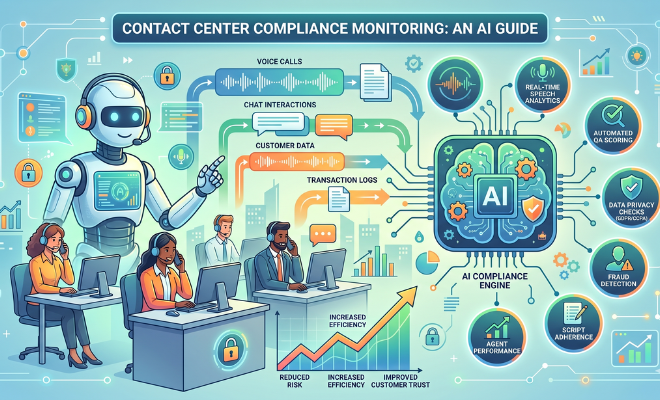
Contact Center Compliance Monitoring: An AI Guide
Sample-based audits miss 99% of calls. Learn how AI compliance monitoring covers PCI-DSS, HIPAA &…
Read More

Enterprise Live Chat For Contact Centers: Build vs Buy
Build, buy, or configure? A practical framework for enterprise live chat — covering omnichannel integration,…
Read More
Contact Us
Let’s Talk!
Choose Services