

By Manu Dwivedi
Vice President, Product Strategy & Innovation — ETSLabs & Etech Global Services
If your contact center is still running quality assurance the traditional way — a team of QA analysts listening to a random sample of calls and scoring them against a rubric — you are making performance and compliance decisions based on a fragment of reality.
Most manual QA programs cover between 5% and 10% of total interactions. That means for every 100 customer conversations that happen in your contact center, 90 to 95 of them are never reviewed. No score. No coaching trigger. No compliance flag. No revenue signal.
For years, this was accepted as normal. It was not a choice — it was a capacity constraint. You can only hire so many QA analysts, and human reviewers can only listen to so many calls.
AI-powered call center QA software changes that equation entirely. Platforms like QEval® from ETSLabs analyze 100% of customer interactions automatically — every call, every chat, every digital touchpoint — and deliver quality scores, compliance flags, and coaching insights in near real time.
In this article, I want to walk you through the real technical and operational differences between manual and AI-powered QA: how coverage compares, where accuracy gains and trade-offs lie, what implementation actually looks like, and how to plan a transition that sticks.
The Coverage Problem: Why 5–10% Is Not Enough
The central limitation of manual QA is not that human reviewers do poor work. It is that they simply cannot listen to everything.
Take a contact center handling 50,000 calls per month. If your QA team reviews 5% of interactions, that is 2,500 calls scored. The other 47,500 are invisible. Inside that invisible majority:
- Compliance violations that go undetected until a regulatory audit
- Coaching opportunities for agents who never get flagged because their bad calls were never heard
- Revenue signals — upsell moments handled well or poorly — that never surface in a report
- Customer escalation patterns that build over weeks before anyone notices
Statistically, a 5–10% random sample is adequate for identifying broad trends. But it is not adequate for catching individual agent behavior patterns, detecting systematic compliance drift, or identifying specific calls that require follow-up. Those require coverage that approaches 100%.
The real problems and opportunities are hiding in the 95% of interactions nobody listens to.
How Manual Call Center QA Software Works
Traditional call center quality assurance software is essentially a structured workflow tool built around human reviewers. Let me walk you through the core process:
Step 1: Call Selection
A sample of recorded calls is pulled — either randomly or by a rule (agent, queue, date range, call length). Most platforms support automated sampling logic, but the output is still a list of calls for a human to review.
Step 2: Human Review
A QA analyst listens to each call while completing a scorecard. Scorecards typically cover categories like greeting compliance, issue resolution, empathy, hold usage, and script adherence. Each item is scored on a scale or marked pass/fail.
Step 3: Scoring and Calibration
Scores are recorded in the QA platform. Calibration sessions — where multiple analysts score the same call — are run periodically to align scoring standards. Inter-rater reliability remains a persistent challenge.
Step 4: Reporting and Coaching
Aggregate scores roll up into dashboards. Low-scoring agents are flagged for coaching. The feedback loop from call to coaching action typically runs days to weeks.
Where this works well: For nuanced calls requiring deep contextual judgment, human review still delivers real value. Complex escalations, sensitive interactions, and situations requiring interpretation benefit from a trained analyst.
Where it breaks down: Volume. Speed. Consistency. And coverage.
How AI-Powered QA Scoring Works
AI-powered contact center QA software replaces manual sampling with automated analysis of every interaction. The architecture involves several technical layers working in concert.
Speech-to-Text Transcription
Every recorded call is transcribed using automatic speech recognition (ASR). Modern ASR engines achieve high accuracy on contact center audio, including handling accents, overlapping speech, and industry-specific vocabulary.
Natural Language Processing
Transcripts are analyzed using NLP models trained to identify specific behaviors, phrases, topics, and patterns. This includes detecting whether an agent delivered a required disclosure, how a customer expressed dissatisfaction, or whether a compliance script was followed.
Automated Scoring
Each interaction is scored against a defined rubric — the same categories a human analyst would score, applied consistently across every single call. Scoring happens automatically, typically within minutes of call completion.
Signal Detection and Alerting
Beyond standard scoring, AI models detect specific signals: compliance violations, escalation language, churn risk indicators, upsell opportunities, and sentiment shifts. High-priority flags can trigger immediate alerts.
Coaching and Workflow Integration
Scores and flags feed directly into coaching workflows, agent dashboards, and supervisor views. Agents can see their own performance data. Supervisors can filter by score, behavior, or risk category across their entire team.
The result: every interaction gets a score. Every agent gets visibility. Every compliance risk gets flagged — not just the ones that happened to land in a 5% sample.
Accuracy Trade-offs: Human Judgment vs Machine Consistency
This is where things get honest. Neither approach is perfectly accurate. The trade-offs are real and worth understanding.
Where Manual QA Has the Edge
Contextual nuance. A human analyst can understand that an agent’s tone, while technically off-script, was the right response to a highly distressed customer. AI models score what they detect; they do not always weight context the way a skilled reviewer would.
Complex judgment calls. Calls involving ambiguous situations — legal edge cases, unusual customer requests, cultural context — benefit from human interpretation.
Subjectivity scoring. Categories like empathy or professionalism are inherently subjective. Humans have a natural sense for these. AI models must be carefully trained and validated to score them reliably.
Where AI-Powered QA Has the Edge
Consistency. A human analyst’s scores drift over time, vary between reviewers, and are influenced by fatigue, mood, and calibration gaps. AI scores the same behavior the same way every time, on every call.
Coverage. 100% vs 5–10%. There is no comparison on this dimension.
Speed. AI delivers scores within minutes of call completion. Manual review cycles take days.
Pattern detection at scale. AI can identify that a specific compliance phrase is being dropped on a particular shift, with a particular team, on a particular queue — because it has scored every call. A human QA program would take weeks to detect the same pattern through sampling.
Bias elimination. Manual QA inadvertently introduces reviewer bias — certain agents get reviewed more, certain behaviors get scored harder or softer depending on the reviewer. AI applies the same standard uniformly.
The Practical Answer
The strongest QA programs combine both. AI handles 100% coverage, scoring, compliance detection, and coaching data. Human reviewers focus their time on the calls that AI flags as high-complexity, borderline, or high-stakes — where contextual judgment adds the most value. This is the model QEval® is designed to support.
Cost Models: Manual vs Automated QA
Manual QA Cost Structure
Manual QA costs scale with headcount. To cover more interactions, you hire more analysts. Typical cost drivers include:
- QA analyst salaries (typically $40,000–$65,000 per year in the US, lower offshore)
- QA software licenses for scorecard and reporting tools
- Calibration time — senior QA staff reviewing the same calls for alignment
- Management overhead
- Delayed detection costs — compliance violations, coaching gaps, and churn signals missed due to low coverage
A contact center with 200 agents might run a QA team of 8–12 analysts to maintain 5–8% coverage. That is a significant fixed cost that does not improve coverage proportionally.
AI-Powered QA Cost Structure
AI-powered call center quality assurance software typically follows one of two models:
Per agent/month pricing — a recurring seat-based fee that covers unlimited interactions for each agent. This model is straightforward for contact centers with stable agent counts.
Volume-based pricing — priced on interaction volume (calls, minutes, or contacts processed). This suits organizations with variable contact volumes or non-contact center use cases.
Implementation typically involves a one-time setup fee covering integration, model configuration, and scorecard buildout — ranging from mid-five figures for smaller deployments to low-six figures for enterprise-scale programs.
The Cost Comparison
At scale, AI-powered QA is significantly more cost-efficient per scored interaction than manual QA. But the more important framing is value per interaction. Manual QA at 5% coverage means 95% of interactions produce zero quality data. AI-powered QA means every interaction contributes to performance visibility, compliance assurance, and coaching intelligence.
The ROI case for automated QA software is built on four pillars: reduced QA staffing costs, compliance risk reduction, agent performance improvement, and revenue signal capture.
Implementation Complexity
One of the most common questions I hear when organizations evaluate call center QA software is straightforward: how long does this actually take to implement?
Manual QA Software Implementation
Traditional QA platforms are relatively straightforward to deploy. Core implementation steps include:
- Connecting to your call recording or CCaaS platform for call access
- Building scorecards and evaluation forms
- Configuring user roles and permissions
- Training QA analysts on the platform
Timeline is typically 2–6 weeks for a basic deployment.
AI-Powered QA Implementation
AI-powered platforms require additional configuration but are designed to deploy faster than most organizations expect. A well-architected platform like QEval® follows a structured process:
Integration: Connect to existing CCaaS, telephony, or recording infrastructure. QEval® integrates with major platforms including Genesys, NICE, Avaya, Five9, and others.
Data ingestion: Establish the pipeline for call recordings, transcripts, and digital interaction data.
Model configuration: Define the behaviors, phrases, categories, and compliance rules the system will score. This is where domain expertise matters — the quality of what you detect depends on the quality of how you configure detection.
Scorecard mapping: Align AI scoring categories to your existing QA framework, or build a new one.
Calibration: Run a calibration phase where AI scores are compared against human scores to validate accuracy before full deployment.
Dashboard and workflow setup: Configure reporting views, alert thresholds, coaching workflows, and supervisor tools.
A well-managed AI QA implementation runs 4–8 weeks for full production deployment. Platforms built inside operational environments — as QEval® was, running Etech Global Services’ own enterprise BPO programs — tend to have smoother integrations because they have been tested against real operational constraints, not just demo environments.
Transition Planning: From Manual to AI-Powered QA
Switching from manual to AI-powered call center quality assurance software is not just a technology change. It is an operational change that affects QA teams, supervisors, agents, and reporting structures. A planned transition is critical.
Phase 1: Audit Your Current State
Before selecting or implementing any platform, document your existing QA process:
- What is your current interaction coverage rate?
- What scorecard categories do you use, and how are they weighted?
- What compliance requirements must be scored?
- What are your current coaching and performance management workflows?
- What does your CCaaS and recording infrastructure look like?
This audit serves two purposes: it surfaces requirements for the new platform, and it gives you a baseline for measuring improvement.
Phase 2: Define Success Criteria
Establish specific, measurable outcomes for the transition:
- Target coverage rate (typically 100% of interactions)
- Compliance detection accuracy threshold
- Scoring consistency benchmark (AI score vs human score calibration)
- Coaching cycle time improvement
- Timeline for measurable performance improvement
Phase 3: Run a Parallel Period
During initial AI deployment, run AI scoring alongside existing manual QA for 4–6 weeks. Compare AI scores against human scores on the same calls. This calibration period:
- Validates AI accuracy for your specific environment
- Identifies model tuning needs
- Builds analyst and supervisor trust in AI scores
- Surfaces any integration or data quality issues before full cutover
Phase 4: Shift Human QA Roles
The goal is not to eliminate QA analysts. It is to redirect their time from routine scoring of sampled calls to higher-value activities:
- Reviewing AI-flagged high-complexity or high-risk interactions
- Calibrating and improving AI scoring models
- Deeper coaching conversations with agents
- Strategic QA program management
This shift typically reduces required QA headcount for routine scoring while increasing the strategic value of the QA function.
Phase 5: Full Deployment and Expansion
Once AI scoring is validated and operational, expand to full coverage, activate automated coaching workflows, and begin using 100% interaction data for performance reporting, compliance assurance, and strategic analysis.
QEval®: How We Built This Into Production
QEval® is an omnichannel quality assurance and interaction analytics platform developed by ETSLabs, the AI and technology arm of Etech Global Services.
What separates QEval® from most call center QA software in the market is its origin. QEval® was built to run Etech Global Services’ own enterprise BPO programs — not designed as a product first and tested in controlled conditions. It was developed inside live operations handling billions of interactions annually, which means it was engineered to meet the reliability, integration, and performance standards of real enterprise contact center environments.
Key capabilities:
- 100% interaction coverage across calls and digital channels
- Automated quality and compliance scoring against configurable rubrics
- Real-time coaching and performance dashboards for agents and supervisors
- Integration with major CCaaS and CRM platforms
- Enterprise-grade security and governance
- Deployment in under 30 days
- 99.999% uptime across Fortune 500 environments
QEval® processes over 2 billion interactions annually. It is available both bundled with Etech Global Services’ BPO programs — where it powers quality guarantees and compliance transparency — and as a standalone platform for contact centers and operations teams that want AI-powered QA independent of BPO services.
We built QEval® to run our own enterprise programs, then made it available as a platform — so it is production-proven, not just a demo. That is the honest difference.
For organizations that want to move beyond 5% QA sampling and start making decisions based on what is actually happening in 100% of their customer interactions, QEval® is designed to deliver measurable improvement in quality, compliance, and performance within 90 days.
Learn more: etslabs.ai/products/qeval-ai-platform
Frequently Asked Questions
What is call center QA software?
Call center QA software is a platform that helps contact centers monitor, score, and improve the quality of customer interactions. It may support manual scoring by human analysts, automated AI scoring, or a combination of both.
What is the difference between manual and automated call center quality assurance software?
Manual QA relies on human analysts reviewing a sample — typically 5–10% — of interactions and scoring them against a rubric. Automated QA uses AI to score 100% of interactions automatically, delivering consistent coverage at scale without requiring a large QA team.
How accurate is AI-powered QA scoring?
AI QA scoring is highly consistent — it applies the same criteria identically across every interaction, eliminating reviewer drift and inter-rater variability. For nuanced or context-dependent calls, AI scores are most effective when combined with targeted human review of flagged interactions.
How long does it take to implement AI-powered contact center QA software?
Well-architected platforms like QEval® deploy in under 30 days for most enterprise environments, including integration with existing CCaaS and recording infrastructure.
Does AI QA software replace QA analysts?
Not typically. AI handles volume scoring and compliance detection across 100% of interactions. Human QA analysts shift their focus to high-value activities: reviewing complex flagged calls, calibrating AI models, coaching agents, and managing the QA program strategically.
Can QEval® integrate with my existing contact center platform?
Yes. QEval® integrates with major CCaaS platforms including Genesys, NICE, Avaya, Five9, and others, as well as CRM systems and recording infrastructure.
Where can I learn more about QEval®?
Visit etslabs.ai/products/qeval-ai-platform or qevalpro.com for full product details. To explore how QEval® fits your environment, contact Etech Global Services.
From Sampling to Certainty
The gap between manual and AI-powered call center QA software is not subtle. It is the difference between making decisions based on 5% of your data and making decisions based on all of it.
Manual QA has served the industry for decades and still has a role in reviewing complex, high-stakes interactions that require human judgment. But as the primary engine for quality assurance, compliance monitoring, and coaching intelligence, it is structurally limited by the volume a human team can review.
AI-powered QA removes that ceiling. With 100% interaction coverage, consistent automated scoring, real-time compliance detection, and direct integration into coaching workflows, platforms like QEval® give contact center leaders the visibility they need to actually manage quality at scale — not just sample it.
If your contact center is ready to move from sampling to full coverage, QEval® is built to get you there.

Related Posts
Contact Center AI: Strategic Decisions Your Organization Must Make
Six strategic decisions contact center leaders must make before choosing AI, from outcomes and augmentation…
Read More
Automated Quality Management Explained: Building QA Programs That Scale
Manual QA covers 3-5% of calls. Automated quality management covers 100%. See how contact centers…
Read More
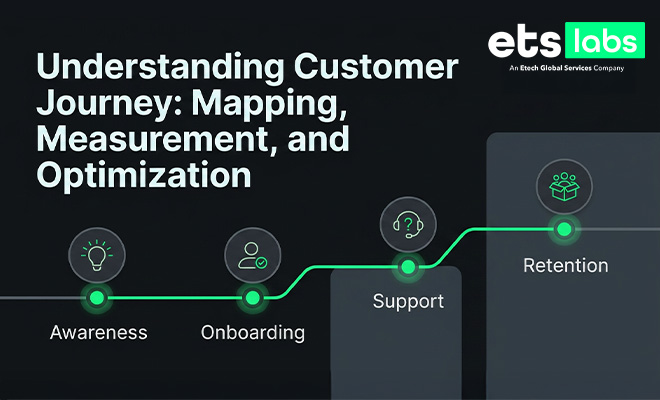
Understanding Customer Journey: Mapping, Measurement, and Optimization
A strategic guide to customer journey mapping and measurement — how to move from whiteboard…
Read More
Contact Us
Let’s Talk!
Choose Services