
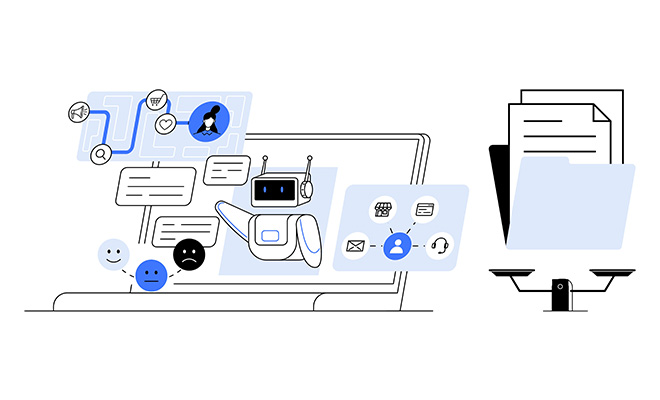
Let me be blunt about something most vendors will not tell you. The technology works. It has worked for years. The reason most implementations fall flat has nothing to do with which platform you chose or how much budget you allocated. It comes down to what your organization actually does after the contract is signed.
I have watched this pattern play out hundreds of times. An organization spends serious money on speech analytics or quality monitoring software. They sit through a well-produced demo. They get excited. Then they spend the next twelve months generating reports that nobody acts on. That is not a technology failure. That is an execution failure.
After working through deployments across financial services, healthcare, telecommunications, and retail, three failure patterns show up consistently. Bad data going in. No workflow to act on insights. And a fixation on metrics that look good in a presentation but tell you nothing about whether your operation is actually improving.
Failure One: Bad Data Going In
Here is what most organizations discover too late. The analytics platform will process whatever you feed it, efficiently and without complaint, then hand you insights built on a faulty foundation. You do not get an error message. You get confident-looking dashboards that are quietly wrong.
The most common culprit is inconsistent call metadata. Missing call reasons. Incorrect agent assignments. Customer segments that do not reflect your actual customer base. When that foundational categorization is off, you can detect sentiment trends all day and still have no idea which processes or agent groups are causing problems.
Audio quality is the second issue. If your transcription error rate climbs above 15%, pattern detection becomes unreliable. Background noise, poor connections, and technical infrastructure problems all degrade what the system hears and records. Establish audio quality baselines before you analyze anything at scale.
The third problem is integration gaps. I have walked into organizations where a single customer has three separate identities across their telephony platform, CRM, and workforce management system. When that happens, you are seeing fragments of a story, not the full picture.
The fix is not glamorous but it is necessary. Before processing large volumes, manually sample 100 to 200 interactions. Verify that automated categorization matches actual content. Confirm transcription accuracy is within acceptable ranges. Check that your system integrations are passing data consistently. This step feels slow. Skipping it costs you months of analysis you cannot trust.
Failure Two: Nobody Acts on the Insights
This one frustrates me more than the data problem because it is entirely preventable. An organization gets the data right, runs solid analysis, surfaces real patterns, and then watches those findings sit in a report that circulates through management meetings for three months without triggering a single change.
People call this an information sharing problem. It is not. It is an ownership problem.
Insights without assigned owners are just interesting observations. When your quality assurance software shows that 40% of billing inquiry calls include customer confusion about statement format, that finding needs a specific person tasked with addressing it. Not the team. A person. With a deadline.
The organizations that get this right treat insight to action as an automated workflow, not a manual handoff. When speech analytics identifies call types that consistently require transfers, that pattern should automatically generate a process improvement ticket in your operations system. When an agent’s quality scores drop below threshold, that should trigger a coaching workflow in workforce management. The system handles the handoff. Humans handle the resolution.
There is also a feedback loop that most organizations never close. You implement a change based on analytics findings. Three months later, does anyone verify whether it worked? Whether handle times came down? Whether first call resolution improved for the affected call type? If you are not measuring outcomes, you are running a reporting program, not an analytics program.
Track how many days pass between pattern detection and first response. High performing contact centers respond to significant findings within 72 hours. If your average is two weeks, better technology will not solve that.
Failure Three: Chasing Metrics That Don’t Matter
Aggregate sentiment scores are the most common vanity metric I see in these implementations. A number showing that 82% of calls had positive sentiment this month tells you almost nothing you can act on. What matters is which interaction types generate negative sentiment, which agents or processes correlate with it, and whether negative sentiment predicts repeat calls or customer attrition. The aggregate number just fills space on a dashboard.
Call volume analysis is another trap. Yes, your platform can count and categorize volume across dozens of dimensions. But volume data without outcome context tells you nothing about whether your service is getting better or worse. High volume might mean your self-service tools are failing. It might mean customers genuinely need the contact. Without outcome data alongside it, you cannot tell which one you are looking at.
The metrics that drive actual decisions connect directly to business results. Instead of overall sentiment, track sentiment in your repeat call population. Those are customers who did not get resolution the first time. Understanding why tells you exactly where your processes are breaking down. Instead of total volume, measure the percentage of contacts requiring multiple interactions to resolve. That tells you about first contact resolution in a way you can actually do something about.
Build your metric framework with both leading and lagging indicators. Rising negative sentiment in a specific call category is early warning before the problem shows up in churn data. Lagging indicators tell you whether your interventions worked. Your dashboard should show the relationship between both.
How Much of Your Call Volume You Actually Need to Analyze
Most organizations either try to analyze everything and drown in data, or sample so lightly they miss important patterns. Neither works well in practice.
For contact centers handling 10,000 or more daily interactions, you can identify most significant patterns with 10 to 15% sampling, if that sample is properly stratified. Stratified means ensuring adequate representation across agent groups, call types, time periods, and customer segments. A purely random sample will under-represent low-frequency, high-impact interaction types. That is exactly where your most interesting problems tend to live.
Exception-based analysis runs alongside your sampling strategy. Regardless of overall sampling rate, analyze 100% of interactions that flag for extremely long handle times, multiple transfers, supervisor escalations, or specific high-value customer segments. QEval™ can automate this flagging so exceptions get complete analysis without manual identification.
In practice, analyzing 20 to 30% of total interactions combined with full coverage of exceptions gives most quality teams what they need while staying operationally manageable. The goal is not to analyze everything. The goal is to analyze enough to detect meaningful patterns and catch the cases where something genuinely went wrong.
Closing the Loop: Making Analytics Actually Produce Results
The organizations that get real operational value out of conversational analytics treat it as a complete cycle. Data validation. Pattern detection. Ownership assignment. Action implementation. Outcome verification. Every step has to connect to the next one.
When you identify a pattern that requires a response, the action goal needs to be specific and measurable. Not ‘improve first call resolution for billing inquiries.’ Rather, ‘reduce first call resolution failure for billing inquiries from 40% to 25% within 60 days.’ That specificity is what makes outcome verification possible.
After you implement a change, track the affected metrics for 30 to 60 days before calling it a win. One week of post-implementation data is noise. A month of consistent improvement is a result.
Document these complete cycles. Which interventions worked. Which ones did not and why. That institutional knowledge compounds over time and makes every future response more effective.
Implementation Reality: What to Expect and When
Initial deployment across system integration, data validation, and user training typically runs 8 to 12 weeks. Organizations that compress that timeline usually skip the validation steps. Those are the same organizations calling their vendor six months later wondering why their insights feel unreliable.
Training needs to extend beyond your quality analysts to the frontline supervisors who will act on what the system surfaces. Plan for 4 to 8 hours of initial training per user role. The people receiving coaching recommendations or process improvement alerts need to understand what the system found and why it matters, not just that a ticket landed in their queue.
Designate an internal analytical champion who develops real depth in how your conversational analytics system works. This person becomes the bridge between vendor capabilities and your operational needs. That role makes more difference to long-term program success than almost any technology selection decision you will make.
The Metrics That Tell You Whether the Program Is Working
Measure operational improvement, not system usage. The primary indicators that matter are first call resolution improvement as a percentage increase in issues resolved without callback or transfer, average handle time reduction for specific issue categories where analysis identified inefficiency, and quality score consistency measured as variance reduction across agent performance.
Track the percentage of identified issues that receive documented responses within defined timeframes. Track the average days from pattern detection to implementation. Those two numbers will tell you more about your program’s operational effectiveness than any volume or accuracy statistics.
Monthly reviews should assess whether the program is delivering operational value proportionate to what you are investing. If the answer is no after a legitimate evaluation period, the problem is almost always in execution. Not the technology.
System Integration: Where to Start and How to Scale
Your telephony platform, CRM, and workforce management system each play a role in making conversational analytics work. Telephony integration gives you automated recording capture and accurate call metadata. CRM integration connects interaction analysis with customer history and account context. Workforce management integration closes the loop between insight detection and agent development through automated coaching triggers.
Do not try to integrate everything at once. Start with core analytical functionality and accept manual data exchange in the early weeks. Add automated integrations in phases. This approach lets you demonstrate value quickly while building toward the comprehensive integration that delivers the most operational efficiency.
Document your integration data flows: what data is exchanged, at what frequency, and how errors are handled. That documentation saves significant time when issues surface and provides essential context when you are evaluating changes to your technology stack.
Avoiding These Patterns Before They Cost You
The organizations that get this right start their planning phase with one question: what operational decisions will this analytics program actually inform? Vague objectives like ‘improve quality’ produce unfocused implementations. Specific objectives like ‘reduce handle time for account inquiry calls by 15% within 90 days’ create clear targets and make outcome measurement possible.
Build your action workflows before you start analyzing large interaction volumes. Map the process from pattern detection through investigation, response implementation, and outcome verification. Test those workflows with small samples first. The insight-without-action failure pattern is almost always a workflow architecture problem. You want to find that out before you have generated six months of insights that nobody responded to.
Here is something I have seen more times than I care to count: a contact center that has invested six figures in analytics software, has a dashboard full of findings, and has not changed a single process in eighteen months. That is not a technology story. That is a leadership story. (The software is fine, by the way. It is doing exactly what you asked it to do, which was generate reports.)
The technology works. QEval™ connects pattern detection to operational improvement through integrated workflows and metrics that actually drive decisions. The variable in your outcome is execution. Organizations that address the execution patterns described here get operational impact. Organizations that do not get very expensive reports.
If you want to see what a properly implemented conversational analytics program looks like in practice, request a QEval™ demo at etslabs.ai.

Related Posts
Voice Agent Automation: How AI Voice Bots Handle Customer Calls at Scale
Voice agent automation achieves 75-85% containment rates and cuts costs by 70%. Learn implementation, and…
Read More
Contact Center RPA: How to Automate Repetitive Tasks and Boost Agent Productivity
Contact center RPA automates repetitive tasks like data entry and CRM updates, reducing after call…
Read More
Enterprise Process Automation: The Complete Guide for Contact Centers
Enterprise process automation guide for contact centers. Learn RPA, voice agents, implementation strategies, and ROI…
Read More
Contact Us
Let’s Talk!
Choose Services