
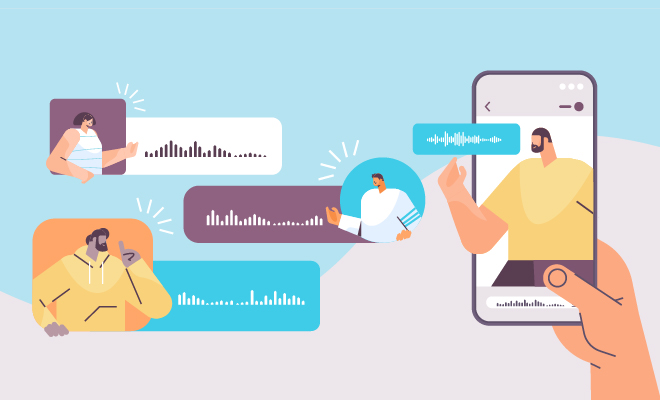
I’ve been in contact centers long enough to remember when “automation” meant a phone tree that made customers want to throw their phones across the room. The IVR era wasn’t automation. It was cost avoidance dressed up as technology. Customers hated it, agents spent half their day cleaning up the mess, and leadership celebrated deflection rates that had nothing to do with actual resolution.
That is not what we are talking about today.
Modern voice agent automation is a fundamentally different capability. These systems understand natural language, hold context across a conversation, and complete transactions without routing callers through a hierarchy of numbered menus. When a customer calls and asks what their balance is and when their next payment is due, the system handles both questions in the same exchange. No menu. No transfer. Just an answer.
How Voice Agent Automation Works in Practice
The technology works because four components operate in real time together: speech recognition converts what the customer says into text, natural language understanding interprets what they actually mean, dialogue management tracks the conversation and pulls data from backend systems, and text to speech delivers the response.
Each component has matured significantly over the past five years. The result is a system that achieves 95 to 98% transcription accuracy under normal conditions and handles intent classification reliably enough to contain 50 to 70% of routine calls without agent involvement — and that is on day one, before you have tuned anything with real call data.
Real Results From Actual Deployments
A healthcare client I worked with implemented voice automation across 45 clinic locations for appointment scheduling. The system handled 82% of scheduling calls without an agent, cut average call duration from 4.2 minutes to 1.8 minutes, and reduced no show rates by 12% through automated confirmation campaigns. That last number matters more than people initially expect. No shows are not just a scheduling problem. They are a revenue problem, and consistent automated reminders addressed a gap that manual outbound calling never solved reliably at volume.
On the financial services side, we automated 68% of balance inquiries at one organization. Average handling time dropped from 3.2 minutes with a live agent to 1.4 minutes automated. The agents remaining on those call types were handling exceptions, not routine transactions. That is the right use of trained headcount.
Outbound is equally productive. Appointment reminders, payment notices, collections conversations that require specific disclosures and compliance timing, post interaction surveys at scale. These are workflows where automated execution is more consistent than manual outbound, both in volume and regulatory accuracy.
The Economics of Voice Automation: What the Numbers Actually Look Like
A human handled call costs $6 to $8 when you account for fully loaded labor, training, supervision, technology, and facilities. A voice agent interaction runs $0.50 to $1.50 depending on complexity and platform pricing.
If you are running 100,000 calls per month and achieve a 70% containment rate, you are automating 70,000 calls. At $7 average cost per agent handled call versus $1 for automated, that is $420,000 in monthly savings, or roughly $5 million annually. A typical single use case implementation runs $150,000 to $400,000 depending on integration complexity. The payback period at those numbers is measured in weeks, not years.
The capacity argument matters just as much as the cost math. Adding human agent capacity takes 6 to 12 weeks minimum when you factor in recruiting, hiring, and ramp time. Voice agent capacity scales in hours. A retailer I worked with experienced 300% volume spikes during peak periods. Voice automation absorbed the routine inquiry volume without proportional staffing additions. That is not a workforce management problem you solve with headcount planning alone.
What Separates a Successful Implementation From an Expensive Lesson
The organizations that struggle with voice automation usually make the same mistake. They treat the deployment as a project with an end date rather than a system that requires ongoing attention.
Start with call types that have clear intents and structured outcomes. Balance inquiries, order status, appointment scheduling, basic troubleshooting flows. These are predictable. The conversation paths are finite. You can map them accurately and measure containment reliably from week one. Avoid starting with complex issue resolution or emotionally charged call types until your foundation is stable and your model has real call data behind it.
Containment rates for initial deployments in the right categories should land between 60 and 80%. As conversation design matures and models are refined with actual call data, that moves to 75 to 85%. If you are below 60% after 90 days, the problem is almost always conversation design, not the technology. Pull your escalation reasons and review them. The patterns tell you exactly where the design broke down.
Escalation handling is where I see the most consistent execution gaps. When automation cannot complete a call, the transfer to a live agent needs to be seamless. The agent receives full context: what the customer said, what was collected, and why the call escalated. No customer should have to repeat their account number because the system failed to pass it forward. That single detail, if handled poorly, destroys confidence in the entire program faster than any containment rate issue will.
Sentiment detection adds meaningful value on top of routing logic. Systems that analyze vocal characteristics alongside word choice identify frustrated callers early and move them to priority queuing with agents who have de-escalation training. Implemented correctly, that capability reduces escalations to supervisors and improves first call resolution on difficult interactions.
What to Measure and What to Watch
Containment rate is the primary operational metric. It tells you what percentage of calls completed without human assistance. Target 75 to 85% in mature deployments for appropriate call types.
Customer satisfaction is the check on containment. High containment with declining CSAT means you are forcing resolution the customer did not want. Survey customers after automated interactions and compare against agent handled calls. A gap larger than 5 to 10 points signals something in the conversation experience needs attention.
Average handle time comparison quantifies efficiency. Voice agents typically handle routine inquiries 40 to 60% faster than human agents. That speed creates capacity benefits beyond cost reduction, particularly during peak periods when you cannot staff your way out of the problem fast enough.
Choosing the Right Platform for Your Environment
The major enterprise options each have real strengths. Google Contact Center AI integrates tightly with Google Cloud infrastructure. Amazon Connect builds voice automation through Lex. Nuance Mix focuses heavily on natural language understanding accuracy for complex language environments. The right choice depends on your existing technology stack, the language populations you serve, and how much customization your specific use cases require.
Cost structures differ significantly across providers. Cloud services price per conversation or per minute, creating variable costs that scale with volume. Enterprise licenses provide predictable fixed costs. Neither is inherently better. Match the cost structure to how your volume is distributed across the year, particularly if you have significant seasonal peaks.
Where to Start
Voice agent automation is not a future state investment. Organizations running it today are seeing the returns and the operational advantages clearly. The question is not whether to implement it. The question is where to start and how to build it properly so you are not redoing it in 18 months.
At ETSLabs, we work with contact centers on both the strategy and the execution. QEval™ gives you the quality monitoring data to understand what your automated interactions look like from the customer’s perspective, not just what your containment numbers say. Those two things are not always the same, and knowing the difference early saves significant rework later.
If you want to understand how to build a voice automation program that delivers measurable results at your scale, let us talk.

Related Posts
 Manu Dwievedi
 Contact Center AI: Strategic Decisions Your Organization Must Make
Six strategic decisions contact center leaders must make before choosing AI, from outcomes and augmentation…
Read More
Automated Quality Management Explained: Building QA Programs That Scale
Manual QA covers 3-5% of calls. Automated quality management covers 100%. See how contact centers…
Read More
Understanding Customer Journey: Mapping, Measurement, and Optimization
A strategic guide to customer journey mapping and measurement — how to move from whiteboard…
Read More
Contact Us
Let’s Talk!
Choose Services