
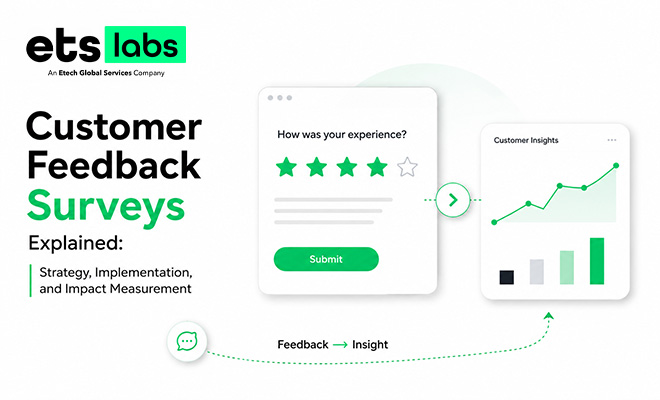
Millions of people search for guidance on customer feedback surveys every month, and most of them are stuck at the same point: they know surveys matter, but they don’t know how to design one that produces answers worth acting on. The problem usually isn’t a lack of tools. Most contact centers already have survey software sitting inside their CCaaS platform or bolted on through a third party. The problem is strategy — knowing what to ask, when to ask it, and what to do with the answer once it arrives.
This guide walks through what customer feedback surveys are, the types that matter in a contact center environment, how to build a strategy around them, what good implementation looks like, and how to measure whether the program is actually working.
What Are Customer Feedback Surveys?
A customer feedback survey is a structured set of questions designed to capture how a customer perceives an interaction, a product, or a relationship with your organization. That word — perceives — matters. Surveys measure perception. They tell you what a customer believes happened and how they felt about it.
That is different from interaction data — call recordings, chat transcripts, and email threads — which captures what actually happened. A customer might rate an interaction poorly because the agent was polite but couldn’t resolve the issue, or rate it well because the agent was pleasant even though the underlying problem was never fixed. Neither data source tells the whole story alone. Surveys and interaction records are complementary, not interchangeable.
In a contact center specifically, feedback surveys serve three functions: they flag individual service failures worth a follow-up, they surface patterns across agents, queues, or processes, and they give leadership a defensible way to report on customer experience over time.
Types of Customer Feedback Surveys
Not every survey is measuring the same thing, and using the wrong type for the wrong moment is one of the most common mistakes teams make.
Post-interaction surveys go out immediately after a call, chat, or email is resolved. They capture a fresh, specific reaction to one interaction and are the backbone of most contact center feedback programs.
Transactional surveys are tied to a specific milestone in the customer relationship — a delivery, an onboarding step, a renewal — rather than a single agent interaction. They tell you how a particular process is performing.
Relationship surveys are periodic and broader in scope. Sent quarterly or annually, they ask customers to evaluate the overall relationship rather than any single touchpoint, and they’re the right tool for tracking long-term sentiment trends.
Net Promoter Score (NPS) asks a single question — how likely is the customer to recommend you — and is best used as a relationship-level indicator, not a per-call metric.
Customer Effort Score (CES) asks how easy it was to get an issue resolved. It correlates strongly with loyalty and repeat business and is particularly useful for diagnosing friction in support interactions.
Matching the survey type to the business question is the first strategic decision every team should make, and it’s the one most often skipped.
Building a Feedback Survey Strategy
A survey program without a strategy behind it produces data nobody uses. Before writing a single question, define what decision the feedback will inform. Are you trying to catch service failures in real time? Track quality trends across a team? Justify a process change to leadership? The answer changes everything downstream — which survey type to use, how often to send it, and who should see the results.
Next, identify the moments in the customer journey where feedback actually matters. Surveying after every single interaction, regardless of significance, produces fatigue and declining response rates. Surveying only at the end of a long relationship misses the specific moments where things went right or wrong.
Frequency and fatigue management deserve real attention. Customers who are surveyed too often stop responding, and the responses you do get skew toward people with strong opinions in either direction — rarely a representative sample.
Balance quantitative and qualitative questions. A 1-to-5 rating scale tells you the size of a problem; an open comment field tells you what the problem actually is. Programs that rely solely on scores end up with a number that moves without anyone understanding why.
Choose your distribution channel deliberately. Post-call IVR surveys capture immediate reaction but limit question depth. Email and SMS allow for more detail but see lower response rates and a delay between the interaction and the feedback. Chat-embedded surveys work well for digital-first interactions. The right channel depends on where and how the customer already engages with you.
Finally, plan for realistic response rates. Most contact center surveys see single-digit to low-double-digit response rates. Build your sampling and reporting expectations around that reality rather than assuming full participation.
Implementation Essentials
Once the strategy is set, execution determines whether the program produces usable data.
Keep surveys short. Post-interaction surveys should run three to five questions; even relationship surveys rarely need more than ten to fifteen. Every additional question reduces completion rates.
Write questions in plain language, free of internal jargon, and avoid leading phrasing that nudges customers toward a particular answer. “How satisfied were you with your experience?” is neutral. “How much did you enjoy our fast and friendly service?” is not.
Decide on a sampling approach. Surveying every customer produces the most complete picture but can create fatigue at scale. A well-constructed random sample can produce statistically sound results with a lighter footprint — the right choice depends on interaction volume.
Consider whether your survey tool needs to be integrated with your CCaaS or CRM platform, or whether a standalone tool is sufficient. Integration reduces manual reporting work and makes it easier to connect survey results to interaction records later.
Roll out in stages: pilot with one team or queue, refine the questions and timing based on early response patterns, then scale to the full organization. Skipping the pilot phase is one of the most common causes of survey programs that stall after launch.
Measuring Impact and Iterating
A survey program justifies itself by driving action, not by generating a dashboard. Start by establishing baseline metrics: response rate, average rating by question, and the distribution of sentiment in open comments. Without a baseline, you have no way to tell whether changes you make later are actually working.
Connect survey results to operational outcomes wherever possible. Is a rising CSAT score correlating with lower churn? Is a declining CES score showing up alongside rising repeat-contact volume? These connections are what turn a survey score into a business case.
Read the open feedback for patterns, not just anecdotes. If the same complaint surfaces repeatedly across different agents or weeks, that’s a signal of a process or product issue rather than an individual performance issue.
Most importantly, act on what you find. Surveys collected but never acted upon erode customer goodwill — customers notice when they’re asked for feedback and see no change. Build a cadence, at minimum quarterly, to review results with the teams who can act on them.
Tool Selection Considerations
The survey tool itself matters less than the strategy behind it, but a few practical considerations save teams from rework later. Standalone survey tools are quick to deploy and often cheaper, but they leave you exporting data manually and reconciling it against interaction records by hand — workable at low volume, painful at scale. Integrated survey tools, built into or connected with your CCaaS, CRM, or quality platform, cost more up front but pay off quickly once you need to correlate survey scores with agent, queue, or interaction-level data.
Look for a tool that supports the distribution channels your customers actually use, not just the ones that are easiest to configure. A tool that only supports email surveys is a poor fit for a contact center where most volume comes through voice and chat. Also check how the tool handles skip logic and branching — the ability to ask a short follow-up question only when a rating falls below a threshold keeps surveys short for satisfied customers while still capturing detail from dissatisfied ones.
Finally, confirm the tool can export raw response-level data, not just aggregated dashboards. Aggregate scores are useful for reporting up, but diagnosing a problem requires the ability to drill into individual responses, filter by segment, and cross-reference against operational data.
Common Mistakes to Avoid
A handful of mistakes account for most underperforming survey programs. Survey fatigue from over-surveying tops the list — customers stop responding, and the ones who do skew toward extreme experiences. Asking questions the organization has no intention of acting on wastes both the customer’s time and the data collected. Poor timing — surveying a customer three days after an interaction, when the details have faded — produces vague, less useful responses. Ignoring outliers and open-text feedback in favor of the headline score misses the “why” behind the “what.” And treating all feedback as equivalent, without segmenting by channel, agent, product line, or customer tier, hides the patterns that matter most.
Bringing It Together
Customer feedback surveys measure perception, and perception is a critical input to any customer experience program — but it’s only one input. What a customer says happened and what actually happened during an interaction are two different data sets, and the strongest measurement programs use both. Interaction data — call recordings, transcripts, and structured quality scoring across every conversation — shows what was said and done. Survey data shows how the customer felt about it. Together, they give leadership a complete, defensible picture of performance instead of a partial one built on sampling and self-report alone.
If you’re evaluating your current feedback collection approach, start by mapping it against the framework above: clear objective, the right survey type for the moment, disciplined implementation, and a real commitment to acting on what you learn. Teams that get those four things right consistently outperform teams that simply bought survey software and started sending questions.
For organizations ready to connect survey feedback to what’s actually happening on every call and chat, that’s where a platform like QEval® comes in — bringing structured, 100% interaction coverage into the same measurement conversation as customer-reported feedback, rather than treating them as separate programs.
A Note on Scale
The strategy above holds regardless of contact center size, but the mechanics change as volume grows. A team handling a few hundred interactions a week can manage survey distribution, response tracking, and reporting largely by hand. A team handling tens of thousands of interactions a week cannot — at that scale, manual reconciliation between survey data and operational data becomes a full-time job for someone, and the insights arrive too late to be actionable.
This is where the case for integration becomes less about convenience and more about necessity. When survey results, interaction quality scores, and operational metrics live in disconnected systems, the organization ends up with three partial pictures instead of one complete one. Leadership sees a CSAT trend line without knowing which agents, queues, or call types are driving it. QA sees quality scores without knowing whether they correlate with customer sentiment. And the survey team sees response data without the context of what actually happened on the call.
Closing that gap doesn’t require abandoning your existing survey tool — it requires treating survey data as one input into a broader measurement architecture rather than a standalone program. Organizations that make that shift consistently report faster time-to-insight and a stronger ability to tie customer feedback directly to coaching, process change, and retention outcomes.
Frequently Asked Questions
What’s the difference between a customer feedback survey and interaction analytics?
A survey captures what a customer says about an interaction — their perception. Interaction analytics platforms like QEval® analyze what actually happened during the interaction itself, at 100% coverage. The two data sets answer different questions and are strongest when used together.
How often should we survey customers without causing fatigue?
There’s no universal number, but a useful guardrail is limiting post-interaction surveys to a subset of contacts rather than every single one, and spacing relationship surveys quarterly or annually. Watch response rate trends over time — a steady decline is the clearest sign a program has tipped into fatigue territory.
Which survey metric should we start with: NPS or CSAT?
CSAT and CES are typically more useful at the individual interaction level, since they map directly to a single experience. NPS works better as a periodic, relationship-level indicator. Most contact center programs start with post-interaction CSAT and layer in NPS later for broader relationship tracking.
Do we need 100% survey response to get useful data?
No. A well-designed random sample can produce statistically reliable results at a fraction of full participation. The bigger risk isn’t response rate — it’s response bias, where only customers with strong (positive or negative) opinions bother to respond.
How does ETS Labs help connect survey data to interaction data?
QEval, built by ETS Labs, scores 100% of voice and digital interactions and can be paired with survey data to show not just what customers said, but what actually happened on the call or chat that shaped how they felt about it.

Related Posts
Understanding Customer Journey: Mapping, Measurement, and Optimization
A strategic guide to customer journey mapping and measurement — how to move from whiteboard…
Read More
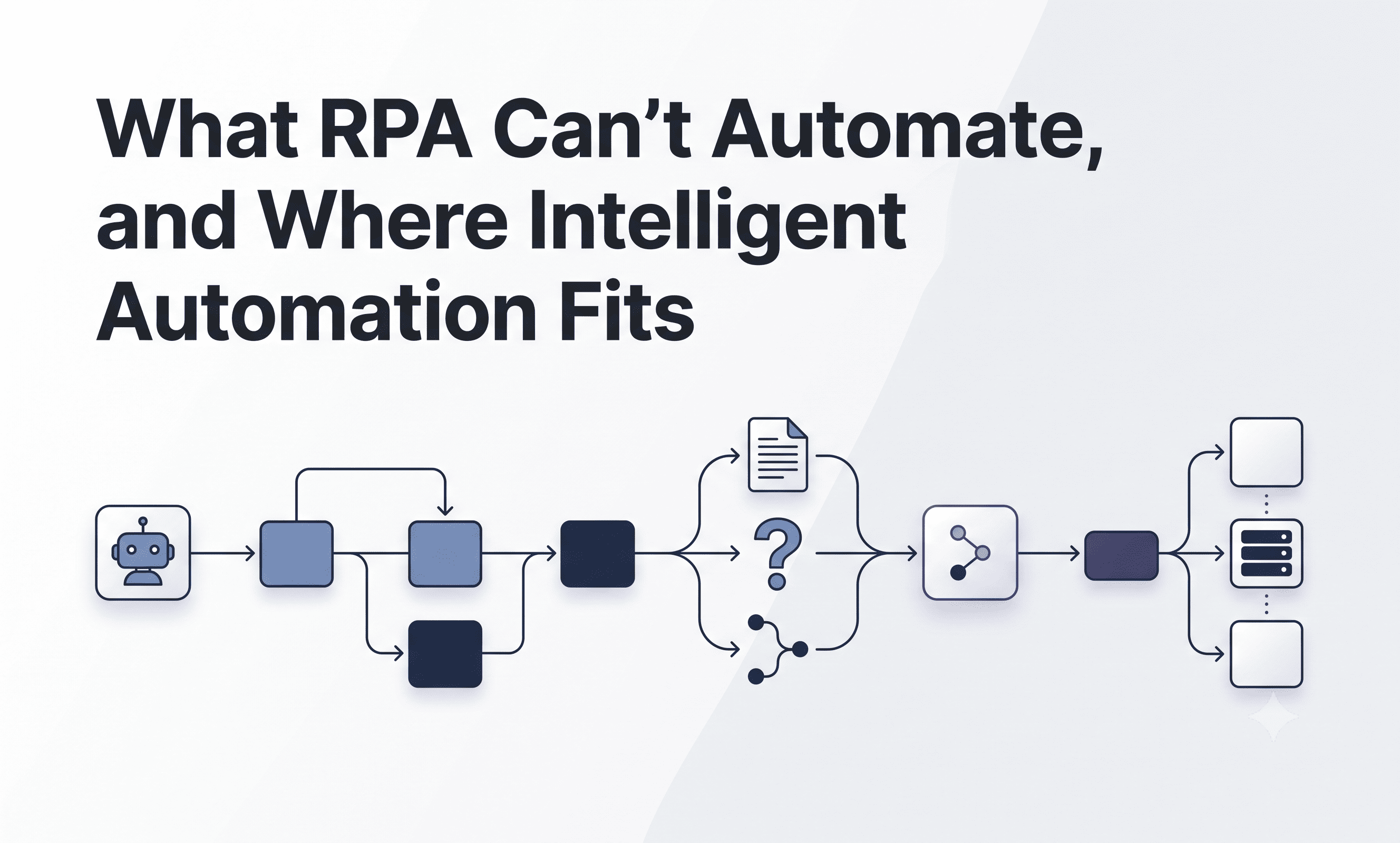
What RPA Can’t Automate, and Where Intelligent Automation Fits
RPA fails on 30-50% of initial projects, mostly on exceptions and unstructured data. See where…
Read More

Contact Us
Let’s Talk!
Choose Services